
Supplier Management Solutions
Table of Contents
- What are Supplier Management solutions?
- How Supplier Management solutions factor in the source-to-pay process
- Why Supplier Management solutions are important
- Common features of Supplier Management technology
- Supplier Management use cases
- How technology supports Supplier Management – Top 5 capabilities
- Why selecting Supplier Management technology can be difficult
- Discover Supplier Management vendors
- Glossary
An In-Depth Guide
What are Supplier Management solutions?
Supplier management is the default methodology to manage the lifecycle of suppliers. So, ‘supplier management’ concerns itself with ‘supplier lifecycle management.’ However, organizations are increasingly seeking innovation and top-line growth from key suppliers, and the interdependencies in value chains (amplified by waves of externalization and the specialization of companies) are only growing. To meet these changes, the technology market segment of supplier management has expanded beyond its traditional post-sourcing and post-contracting world to the following processes:
- Supplier performance and risk management
- Supplier development (including quality management and improvement)
- Supplier collaboration (e.g., supplier innovation)
- Relationship management (including conflict resolution)
The evolution of supplier management is very similar to what happened in the CRM world. CRM focused heavily on sales pipelines before evolving into a more holistic management process that includes strategic account management and customer innovation.
Supplier management is a tricky area, though. Not only does it overlap with both the core source-to-contract (S2C) and procure-to-pay (P2P) processes (e.g., consider how supplier qualification from a process standpoint is as much part of sourcing as it is a “SIM” process within the supplier lifecycle); it also integrates with broader areas of relationship governance, compliance and risk management (supplier GRC), innovation management and even sustainability management.
So, supplier management is evolving from post-contract supplier measurement, development and collaboration to a broader lifecycle of processes, including strategy and planning and sourcing and contract management on the front end. It also ‘closes the process loop’ by feeding back into the strategic sourcing process, which can then lead to recontracting, resourcing or supplier disengagement and offboarding.
How Supplier Management solutions factor in the source-to-pay process
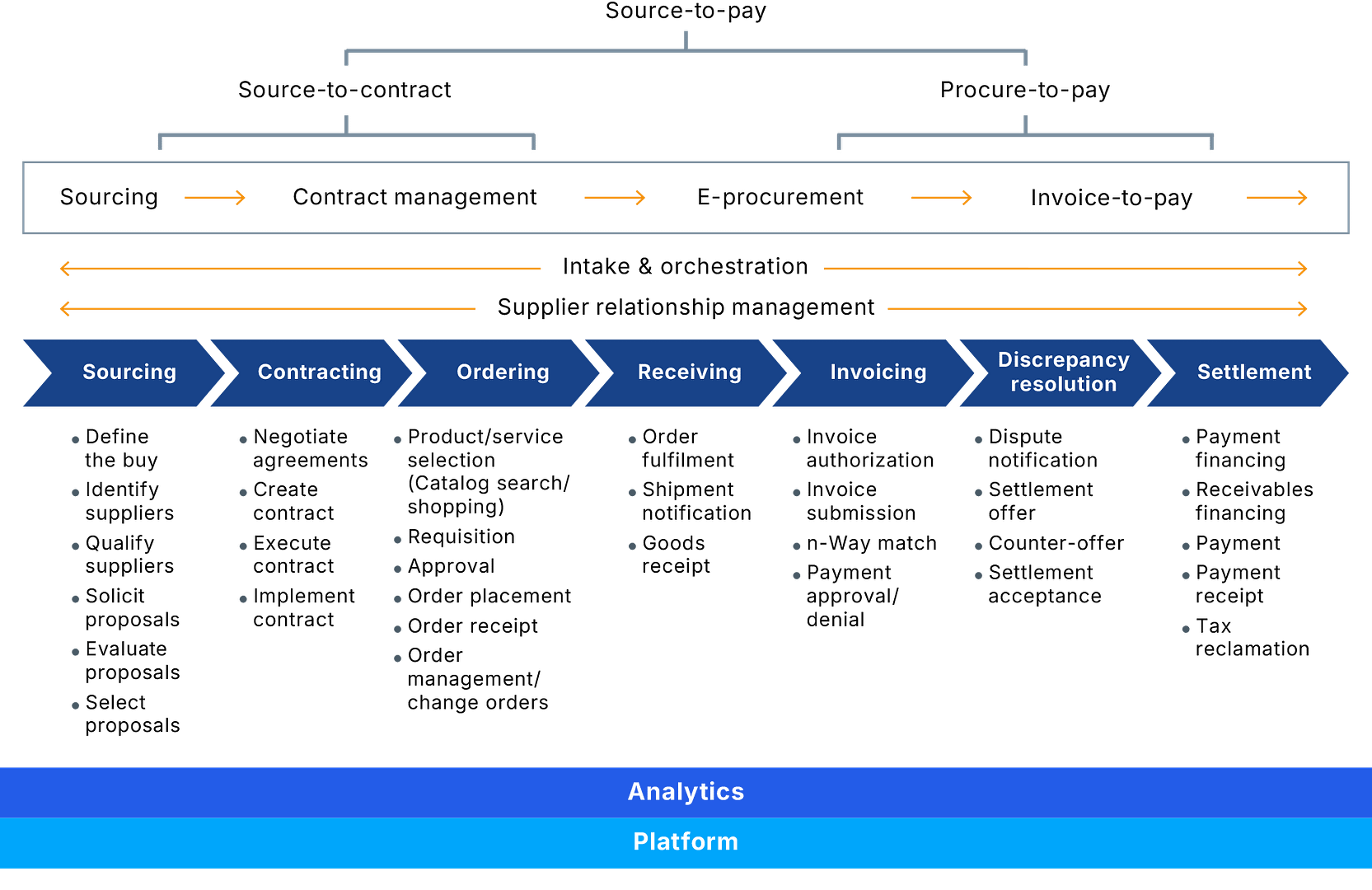
Supplier management is a cornerstone of the whole source-to-pay (S2P) process because every step involves suppliers and/or supplier data.
In addition to enabling organizations to effectively discover, qualify, onboard and manage suppliers, supplier management solutions play a critical role in supporting other components of the S2P process, such as sourcing, contract management and spend analytics. These other processes also deliver critical information to manage suppliers through, for example, performance assessments based on contract performance. The aim is to integrate supplier management with these other S2P components and create a unified source of truth for supplier-related data and insights, enabling better decision-making and driving continuous improvement across the entire process.
Why Supplier Management solutions are important
While traditional justifications for supplier management solutions focused on streamlining manual tasks and enhancing efficiency, modern solutions offer a more comprehensive strategic advantage.
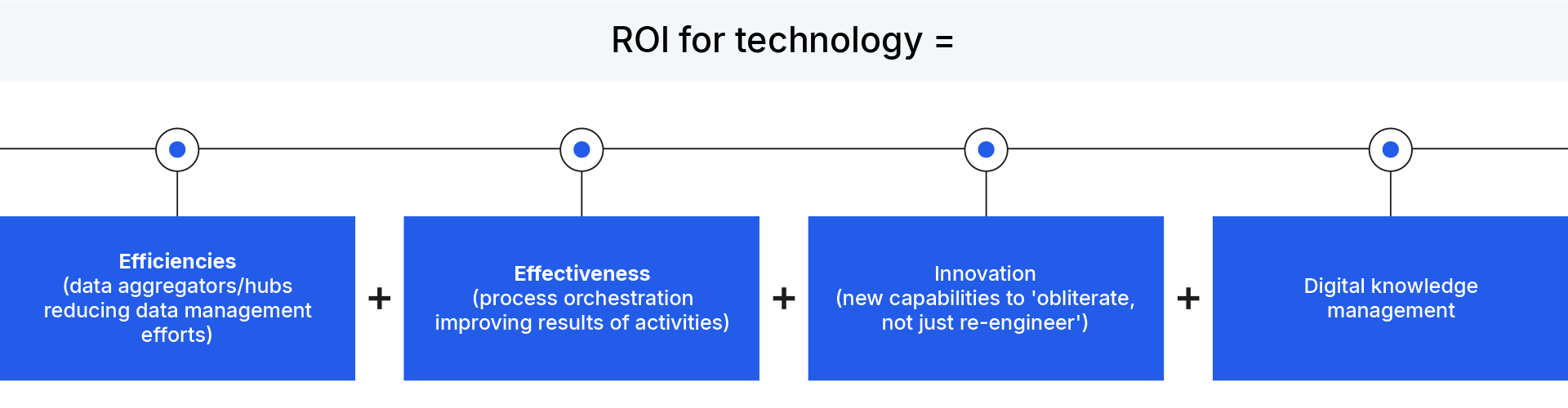
In today’s rapidly evolving business landscape, supplier management solutions play a crucial role in driving success and efficiency for organizations. These solutions provide a comprehensive framework for managing supplier relationships and ensuring transparency, compliance and risk mitigation throughout the supply chain. They offer a holistic approach to supplier engagement, encompassing activities such as supplier discovery, information management, performance tracking and risk assessment. They also facilitate effective collaboration between organizations and their suppliers.
So, by centralizing supplier information, performance data and compliance requirements, these solutions enable better decision-making, improved cost savings and enhanced supplier relationships.
How do I know my organization is ready for a Supplier Management solution?
Some signs that it’s time to step in with a supplier management solution might be:
- Inefficiencies: Your supplier management is plagued by manual tasks, such as supplier onboarding, contract management and performance tracking, that make it slow, time-consuming, manual or prone to errors.
- Visibility: You struggle to get a clear picture of your supplier base, their performance or potential risks.
- Control: The number of suppliers your organization works with has exploded, and/or you have suffered from fraud or other issues due to a lack of governance and controls.
- Ineffective collaboration: Communication with suppliers is slow or inefficient.
- Poor data quality: Supplier data is incomplete, inaccurate, obsolete, duplicated, etc., which impairs your ability to order and pay on time.
- Supplier relationship: You want to build stronger relationships with key suppliers by better understanding internal and supplier expectations.
If any of the above describes your organization, it’s time to look for a supplier management solution.
Some factors to consider when beginning the journey are:
- Business needs: What are your goals and objectives for implementing a supplier management solution, and what will be the scope (categories, geographies, etc.) of the implementation?
- Change management: Is your organization prepared to undergo changes in processes and workflows that a new supplier management solution would bring?
- Stakeholder buy-in: Do you have buy-in from key stakeholders, such as IT, finance and executive leadership?
- Supplier buy-in and adoption: Have you identified the suppliers you want to enroll and developed an adoption strategy to ensure they will use the solution?
- Budget: Do you have the budget allocated for implementing and maintaining a new solution?
- Integration: Can your existing systems integrate with a new supplier management solution, or do you have the resources to manage integration?
- Process standardization: Are your current supplier management processes (roles, steps, templates, assessments, etc.) adopted across the organization, or are there many variations?
- Support: How will the support for internal users and suppliers be provided?
- Data preparation: How clean and complete is your supplier data, and in how many systems is it stored and consumed?
Common features of Supplier Management technology
Supplier management solutions can support the whole supplier lifecycle from the initial contacts to the end of the relationship (offboarding) to ensure that an organization continuously has the proper and most relevant suppliers.
During this cycle, supplier management solutions facilitate the following steps:
- Identification and contact
- Onboarding
- Qualification
- Performance management
- Risk and compliance management
- Relationship management
- Offboarding
To support the above, supplier management solutions include the following capabilities:
- Supplier collaboration portal:
- Rich registration, self-registration and onboarding, e.g., branching workflow or conditional forms, to support differentiated onboarding and data management processes and requirements (one-time supplier, emergency supplier, category-specific details, country-specific requirements, etc.)
- Onboarding templates that support specific initiatives
- Campaign management
- Workflow (process management, configuration, business rules, roles) for internal and external collaboration in a cross-functional approach
- Operational management:
- A supplier repository with views into supplier information, initiatives, etc. that can differ by user, region, commodity classification, etc.
- Searches and reporting on content inside attached documents (digitization of structured/unstructured content)
- Rich supplier profiles and 360° view
- Global support for supplier information gathering at a granular level (divisions, sites, roles, etc.)
- Views into spending (line-level) data when tied to spend analysis
- Qualification and supplier status management based on multiple dimensions (profiles, performance, risk, etc.) and at a granular level at the intersection of multiple taxonomies (categories, business units, geographies, etc.)
- Relationship (value) management:
- Stakeholder engagement and collaboration (in workflows, in assessments, etc.)
- Supplier scorecards for performance, risks, sustainability, etc., including target settings, alerts on deviations and improvement/corrective/escalation actions
- Joint business development planning and innovation
- Information and data management:
- Support for self-declarations (profile updates)
- Automated data enrichment and verification
- Integrations with third-party data providers for profiles and KPIs
- Integration with regulatory bodies and governmental institutions
- Document management (including metadata extraction)
- Content tracking (e.g., expiration dates)
- Content change management and audit trail (and rollback capability)
- Interoperability and orchestration for data distribution (master data management [MDM], process cross-fertilization) and data feeds for a closed loop approach:
- Multi-ERP support
- S2P connectivity
Supplier Management use cases
Supplier Management solutions can have varying use cases, but commonly they are made for:
- Supplier discovery management (SDM): Discover new suppliers, possibly with respect to diversity or sustainability requirements or other unique search requirements, e.g., contracting frameworks/vehicles within government.
- Supplier information management (SIM): Manage all the relevant information about a supplier, including locations, employees, products and services, certifications and insurance certificates based on information from multiple sources (internal, suppliers, third-party data providers).
- Supplier performance management (SPM): Measure and manage the multiple dimensions and expectations related to performance, e.g., quality, reliability, delivery and sustainability.
- Supplier relationship management (SRM): Manage and nurture relationships, such as capabilities for supplier development, supplier collaboration and supplier innovation management.
- Supplier quality management (SQM): Support direct materials procurement, including the management of part-level qualifications, non-conformities and general quality management
- Governance, regulatory and compliance (GRC) management: Ensure that suppliers conform to regulatory requirements, maintain compliance requirements and adhere to buyer requirements.
- Supplier risk management: Measure and manage the multiple dimensions of the risk inherent to the relationship.
- Master data management: Build sources of truth that can be leveraged across the organization and systems for multiple processes.
How technology supports Supplier Management – Top 5 capabilities
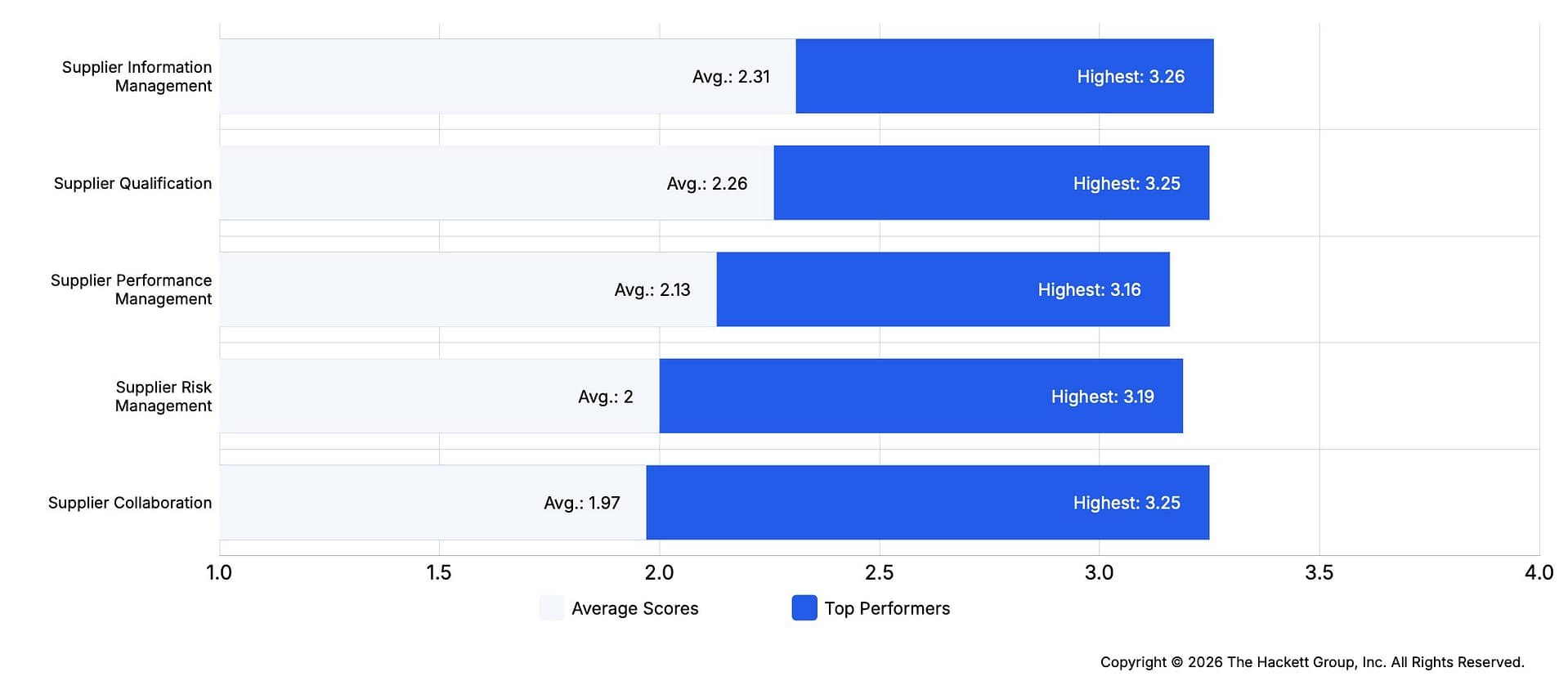
The Top 5 capabilities are the highest-weighted critical capabilities that are central to the displayed solution market benchmark. They have been developed by the Solution Intelligence team and refined by procurement users in tech-selection projects using our market-proven SolutionMap benchmarking dataset and associated TechMatch decision-making tool.
These Top 5 critical digital capabilities stem from the TechMatch workbench, which, in turn, are derived from a larger number of requirements scored in our SolutionMap solution benchmark.
Top 5 Supplier management capabilities
1. Supplier information management
The ability to manage (collect, enrich, validate) supplier-related information to make it a source of truth that is fed to other processes and solutions that need it.

The average-performing supplier management vendor has supplier profiles focused primarily on identity-related data, such as identifiers, locations, industry and category codes. It is often extended with information on certifications, financials (payment) and sustainability. Customers can extend the data model to create more fields in profiles. The information is entered in multiple ways: by users at the time of the creation; by suppliers during the registration or self-registration process, which is often dynamic; by a small number of connected third-party sources. Users can search suppliers by their profiles with predefined filters, tags or simple queries.
Top performers differentiate themselves through their breadth and depth. They can collect and verify more information from a large number of third-party sources. Their search function is also more powerful and can be based on profile content, metadata extracted from documents and sentiment analysis. They enhance registration, self-registration and profile management by using a network and connected sources to prefill certain fields and push updates to all parties on the network and by having a richer workflow engine to manage approvals and alerts efficiently and effectively.
Top-performing vendors integrate with solutions for multi-tier supply chain mapping, check suppliers against multiple country-based blacklists and even verify ownership of bank accounts in many countries. These capabilities offer accurate, up-to-date supplier information for buyers and make the registration process seamless and low-effort for suppliers.
2. Supplier qualification
The process of evaluating and approving vendors based on their ability to meet certain standards, expectations and requirements set by the buying organization.

The average-performing vendor supports supplier qualification for classification and segmentation based on the collected information available in the solution, which varies according to the vendor’s SIM capabilities. A configurable workflow supports the process. However, statuses are assigned manually (as the output of these workflows) and, more often than not, at a supplier’s company level and not at the intersection of multiple taxonomies, e.g., geography or organization.
Top-performing providers use more data to support supplier validations and, more importantly, are more prescriptive in recommending or automatically assigning statuses. Also, statuses can be defined at a granular level to reflect the differences between categories, geographies and business units.
Top performers can use data gathered from various sources to automate supplier segmentation based on multiple and complex customer-configured business rules.
3. Supplier performance management (measurement)
The ability to define the relevant performance indicators and measure actuals vs. targets.

The average-performing vendor provides customers with out-of-the-box KPIs and scorecards that are calculated based on data from assessments, ERP interfaces and third-party sources. Customers can create additional scorecards but not always the underlying KPIs. Actuals are measured against targets, and deviations can generate alerts.
Top performers leverage their strong analytics capabilities to offer customers more out-of-the-box content, deeper configurability in designing KPIs and scorecards and nested KPIs/scorecards capabilities. Customers can set more granular targets and measure gaps against these and community-based benchmarks. For example, leading providers enable customers to manage targets at category and business-unit levels.
Customers can then cascade and instantiate these targets at the supplier level to ensure they are simultaneously contributing to the category’s overall performance and remaining realistic and tailored to each supplier. From there, they can roll-up actuals from each supplier to the category level to measure actuals versus the target of the category.
4. Supplier risk management
The capacity to manage supplier risk (identify, assess, mitigate, monitor).

The average-performing vendor supports risk assessments via dedicated KPIs. They typically have standard support for issue resolution and monitoring, such as the ability to monitor issues against timelines and send reminders and notifications for escalations.
Top performers go above and beyond the average vendor for supplier risk modeling by offering a more extensive set of out-of-the-box KPIs, including semantic and sentiment analysis for news and connected third parties.
Some top-performing vendors help customers perform pre-impact what-if analyses to preemptively define mitigation plans and playbooks that can quickly be activated when an incident happens. In addition, a few leading providers have control tower capabilities to bring risk visibility beyond tier 1s and for goods in movement.
5. Supplier collaboration
The ability to support multi-channel and multi-directional collaboration is required in today’s business network of many-to-many supplier-buyer relationships.

An average supplier management platform facilitates supplier collaboration primarily via one-to-one unidirectional portals. Suppliers can view, receive, confirm, complete, etc. They can also communicate with buyers. But they have limited value-adding features and are limited in their ability to manage users and accounts.
Top performers support a full network data model that allows many-to-many relationships with one account, enabling suppliers to collaborate with their customers and, to a certain extent, with their own suppliers – i.e., the buying organization’s tier 2s – in the solution.
For top vendors that have enabled multi-party collaboration, select tier 1s and even tier-x can work together. Also, certain leading providers offer suppliers with business development features.
Why selecting Supplier Management technology can be difficult
Selecting any technology product can be difficult for a variety of reasons, but here are some of the most important factors to consider:
- Supplier management is broad, has multiple facets and encompasses multiple activities that vary from category to category and can even vary with the type of supplier.
- Market characteristics:
- The supplier management technology sector is large, complex and fragmented, with a diverse range of vendors specializing in highly specific areas within the field. This multitude of options can be overwhelming for procurement organizations looking to find the best fit for their specific needs.
- This problem is not made easier by solution providers who seek to create new terms to differentiate their solution offerings. For example, is ‘supplier information management’ a distinct niche solution area to manage supplier self-registration, qualification, certification and onboarding? Or is it a higher-level form of master data management focused on all supplier information, regardless of the processes that create and consume that data? Tracking the naming conventions with supplier management technologies is especially challenging. Below, we break supplier management solutions out into different component ‘buckets’ and share many of the technical components that make these solutions tick.
- New features and functionalities are constantly emerging. Keeping pace with the evolving landscape and selecting a solution that can scale with future needs requires ongoing research and evaluation.
- Interoperability (systems and cross-functional collaboration):
- Supplier management is at the crossroads of all other S2P activities, each of which rely on it at some point. In addition, supplier data is used by many operational and non-procurement systems (ERP, financial systems, etc.).
- Also, some supplier management processes (for example, performance management) require data from other processes and systems (on-time delivery, quality KPIs, etc.). It means that a supplier management solution needs to integrate with a potentially large number of applications and external data sources.
- The above also means that supplier management solutions involve users beyond procurement. Therefore, understanding requirements from other functions and how a solution addresses them while providing an intuitive user experience (to avoid a steep learning curve) is critical.
- Configuration management: Despite the fact that supplier management processes are well-known and established, there are multiple variations, even within an organization. Therefore, configuring a solution for potential specific requirements is often an important activity. Not all solutions have the same degree of configurability, though, nor do they have the same approach to configuration management. Some, for example, use a self-service approach while others use support tickets.
How The Hackett Group® can help you select Supplier Management technology
The Hackett Group® specializes in procurement technology diligence. In addition to projects and advisory, we offer Procurement Technology Intelligence Program Membership, the only membership community and technology comparison tool of its kind, with access to SolutionMap vendor rankings dataset combined with independent, zero pay-to-play, brutally honest coverage of solution providers, market developments and trends affecting procurement, finance and supply chain.
We can help you find a solution that:
- Can be used for holistic supplier management covering all aspects, such as information, qualification, risk, performance or relationship management.
- Can go deeper in one of the areas above mentioned that you need to manage or enhance.
- Has configurable data models and processes.
- Provides rich, configurable and sometimes pre-vetted supplier profiles based on supplier entries, third-party sources, community information and your data.
- Streamlines onboarding and discovery by leveraging a network and/or AI-based data scraping and validation.
- Can be used as a master connected to multiple other systems to distribute the relevant and verified information in its golden records.
- Can provide a multidimensional view of suppliers covering all activities as well as performance/risk indicators based on qualitative and quantitative considerations.
Discover Supplier Management vendors
These are the vendors we are currently covering or will cover soon. Visit their vendor directory pages for a quick vendor overview, demographic information and relevant articles, including our vendor analyses.
| Vendor | Description |
|---|---|
| apexanalytix | apexanalytix provides recovery audit services and solutions for supplier management, with a focus on supplier information management, risk/ESG and compliance that leverages its network of companies and database of golden records. |
| Bedrock | Bedrock specializes in supplier onboarding, banking and risk verification and master data management to ensure that supplier records are accurate. It integrates with ERPs and P2P systems, enabling efficient onboarding and management of suppliers while enhancing data accuracy and reducing manual effort. |
| Brooklyn Solutions | Brooklyn Solutions automates and optimizes supplier management, empowering users to extract maximum value from their contracts and commercial relationships. The platform focuses on contract management, performance optimization and risk mitigation. |
| Certa | Certa is a third-party lifecycle management platform that enables customers to manage the entire lifecycle of third parties, including TPRM (including KYC/AML), central intake, CLM and ESG. Its vendor lifecycle includes vendor onboarding, risk management, monitoring and vendor base knowledge management. |
| Corcentric | Corcentric has a comprehensive S2P offering that can also complement through its services offering (advisory, managed services). Its supplier management capabilities include supplier management functionalities, addressing supplier onboarding, profile management, performance evaluation and risk management. |
| Coupa | Coupa is a leading S2P platform that offers a user-friendly interface and opportunity detection based on its large user community. Coupa provides strong and broad supplier management solutions. |
| Craft | Craft serves as a supplier intelligence layer, pulling data from over 70 partners and the broader web to provide its clients with easy-to-use, up-to-date supplier information. It has a deep understanding of supplier risk financially, socially and geographically and offers in-depth supplier profiles that include everything from credit scores to warehouse locations. |
| ebidtopay | ebidtopay’s suite for mid-size to large organizations follows a single-source-code approach with many configuration and customization options without the need for coding changes. It supports holistic supplier management for all categories, including direct materials. |
| Efficio | Efficio is a renowned sourcing consultancy offering solutions for supplier collaboration and performance tracking. It stands out for its focus on enhancing supplier relationships and optimizing supplier performance. |
| GEP | GEP offers a full range of services, including market/category intelligence, supplier management services and BPO. Its natively integrated suite provides supplier management capabilities with a focus on supplier lifecycle and data management, including MDM integration. |
| Graphite Connect | Graphite Connect is a platform where suppliers can manage their profiles, like individuals on LinkedIn or other social networks; it also serves as a central platform for companies to share information publicly and privately. |
| HICX | HICX specializes in supplier data management, offering solutions for complex process landscapes and centralized supplier interactions. It stands out for its expertise in MDM integration and its focus on creating unified and streamlined supplier experiences. |
| ISPnext | ISPnext is an S2P solution that sells individual modules for supplier management, sourcing, contract management, procurement, AP automation and spend analysis. |
| Ivalua | Ivalua offers a natively integrated, intuitive and flexible suite. It enables organizations to streamline and enhance holistic supplier management (supplier onboarding, performance tracking, risk and sustainability assessments) through cross-functional collaboration and cross-process fertilization and integration. |
| JAGGAER | JAGGAER One is an S2P suite that grew through several acquisitions to cover all spend. From a supplier management standpoint, it covers the whole supplier lifecycle, including direct–materials–related capabilities, such as granular qualifications and supply quality management. |
| Kodiak Hub | Kodiak Hub offers modular solutions for capturing supplier data, managing contracts, assessing compliance, evaluating performance and driving innovation. Users benefit from automated data management, robust analytics and seamless integration with existing business systems |
| LUPR | LUPR is a supplier management solution built on the Salesforce platform, designed to help procurement organizations manage their suppliers effectively. It offers a 360-degree, real-time collaboration tool to enhance supplier relationship management by enabling users to extract, analyze and manage data on suppliers, oversee activity pipelines and track performance and risks. |
| Medius | Medius is a modular S2P suite that covers the mid-market in Europe. Its supplier management capabilities focus on onboarding and are meant to integrate with payables and procurement processes. |
| MeRLIN | MeRLIN is an S2P suite provider that supports direct and indirect spend for mid-market companies in the manufacturing and public sectors. Its supplier management solution has a focus on supporting sourcing and provides onboarding, SIM and performance. |
| Onventis | Onventis offers an S2P suite focusing on the European mid-market. Within that suite, it has capabilities to support supplier management from onboarding to offboarding. It also offers a supplier network which is a standout among mid-market vendors. |
| Proactis | Proactis offers an S2P suite that includes a marketplace/supplier network. Its supplier management feature enables organizations to manage the complete supplier lifecycle and orchestrate supplier data management and distribution. |
| Procurence | Procurence provides a supplier management platform focused on supplier qualification and performance monitoring for direct materials. Its solution is particularly well-suited for customers with deep and complex requirements for SPM/SQM. |
| ProcurePort | ProcurePort offerings cover the S2P process. Its supplier management module centralizes supplier information, communication, risk and performance data and makes this valuable data available to other processes it covers. |
| Promena | Promena is an S2P suite that focuses on smaller and mid-size businesses and supports supplier management, sourcing, contracting and e-procurement. Its supplier management module includes tools to manage supplier data, performance and risk, integrating ESG considerations into the procurement process. |
| QAD | QAD provides supplier management solutions, focusing on direct supplier management and compliance checks. It also tracks quality, inspections and engineering capabilities for enhanced supplier relationship management and risk mitigation strategies. |
| SAP Ariba | SAP Ariba is a leading S2P suite platform known for its comprehensive capabilities in multiple verticals and for all spend. It supports the management of the whole supplier lifecycle and customers benefit from its vast supplier network. |
| State of Flux | State of Flux is a global consultancy specializing in procurement and supply chain management. It offers training programs and a supplier management solution called SupplierBase that focuses on relationship management and embeds a vast amount of proprietary knowledge. |
| Suppeco | Suppeco turns supplier relationships into something tangible, measurable and factual. It does so by allowing customers to configure their specific SRM framework to collaborate with stakeholders, run reciprocal assessments and report on the status of the relationships. |
| SupplHi | SupplHi provides industrial organizations with full-service supplier management solutions, focusing on CAPEX and MRO spend. It offers comprehensive vendor management, compliance checks and AVL creation, with a focus on deep compliance, sustainability and risk management for improved supplier relationships. |
| Supplier.io | Supplier.io built its business on supplier intelligence and then extended to ESG and risk. It recently acquired TealBook to reinforce its offering and launch “Atlas” combining TealBook’s vendor master capabilities (legal entity resolution, deduplication, parent-child hierarchy mapping) with Supplier.io’s enrichment layer. |
| Trust Your Supplier | Trust Your Supplier focuses on data verification and compliance. It provides a platform for managing supplier information and ensuring compliance with regulatory requirements for better supplier relationship management. |
| VORTAL | VORTAL offers solutions that connect thousands of public and private buyers with an international community of qualified suppliers. Its solution covers S2P but focuses more on sourcing and e-procurement. Its supplier management capabilities support sourcing and e-procurement. |
Glossary
| Term | Definition |
|---|---|
| Corporate social responsibility (CSR) | Corporate social responsibility is a qualitative and self-regulating business model that aims to improve society and the environment. |
| Environmental, social and governance (ESG) | Environmental, social and governance focuses on reaching certain performance metrics, setting measurable goals and conducting audits. There are explicit standards surrounding ESG, and ESG performance now serves as a sustainability credit rating for companies and their investors. ESG is mostly externally driven by regulations and implemented through measurable goals and audits. |
| Supply chain risk management (SCRM) | Supply chain risk management specifically focuses on identifying, evaluating and mitigating risks within the supply chain itself. This includes risks related to supplier reliability, geopolitical factors, natural disasters or changes in demand. SCRM aims to proactively manage disruptions and maintain continuity in operations by addressing risks at various levels of the supply chain. |
| Supplier performance management (SPM) | Supplier performance management is the process of defining, tracking, analyzing and managing the performance of a company’s suppliers. The goal is to get the best and expected value out of these relationships. |
| Supplier quality management (SQM) | Supplier quality management is a systematic approach to evaluating, monitoring, and improving supplier performance to ensure raw materials and components meet specified quality standards. |
| Supplier relationship management (SRM) | Supplier relationship management is a systematic way for companies to manage their relationships with suppliers to get the best possible outcome. This can involve things like negotiating prices, ensuring reliable deliveries and even working together on new product development. Strong SRM helps businesses run smoother and be more competitive. |
| Third-party risk management (TPRM) | Third-party risk management is a broader concept than SCRM. It encompasses both supplier risk management and the risks associated with any third-party vendors or partners, such as IT contractors, logistics partners or even customers. It’s about ensuring that organizations have effective processes in place to identify and mitigate risks across their extended enterprise network. |
Related Insights

Beyond Savings: Can Your Organization Prove Procurement’s Full Business Value?
Traditional savings opportunities are becoming harder to find, yet procurement continues to create value across working capital, supply continuity, risk…

AI Is Setting a New Standard for Supply Chain Performance
Demand volatility, tariff exposure and margin pressure are forcing supply chains to deliver more without proportional increases in resources. AI…

AP Automation/Invoice-to-Pay Solutions
Accounts Payable (AP) /Invoice-to-Pay (I2P) automation software is designed to streamline AP processes within organizations by automating the receipt, processing…

Carbon Management Solutions
Carbon management solutions are designed to assist companies in reducing their carbon footprint, usually taking into consideration the emissions of…